
From co-creation to public space: Eskilstuna launches the first SET-PED urban furniture prototype
- setpedproject
- Jun 30
- 3 min read
Updated: Jul 6
Last week, Eskilstuna marked an important milestone for the SET-PED project with the installation and launch of the first urban furniture prototype. As one of the project’s three pilot cities, Eskilstuna is the first to move from co-creation, technical assessment and prototyping into a real public-space installation.
The prototype is located in Fröslunda, south of central Eskilstuna, in an unnamed green area along a heavily used walking and cycling path connecting schools, housing areas, Mötesplats Fröslunda and a local grocery store. The site is identified in the neighbourhood development plan as the starting point for a future park and as part of a potential cultural path, within a wider municipal focus on safety, connectivity, social sustainability and co-creation with residents.
The launch represents more than the completion of one physical object. It shows how local needs, circular design and technical experimentation can come together in a public space intervention that is meant to be tested, used and adapted over time.

A prototype shaped by local needs
The design of the urban furniture responds to needs identified through the local co-creation process. Participants highlighted the need for a safer and more welcoming place to sit, gather and spend time outdoors, as well as the need for better lighting, shade and rain protection.
These ideas were translated into a sheltered seating structure that can support everyday use of the area. The prototype combines a curved roof, wooden seating elements, recycled stone foundations, reused metal components and solar-powered lighting. In this way, it addresses both social and environmental objectives: creating a more comfortable public space while testing how circular materials and renewable energy can be integrated into urban furniture.
From workshop to installation
The construction process started on April and developed through several stages. The first phase focused on preparing the main structural and seating elements. Granite blocks were selected as heavy foundations, while oak logs were split, planed, shaped and aligned to form the seating surfaces.
In parallel, reclaimed metal pipes from former lamp posts from a pre-school yard were prepared as structural supports for the roof. These were fixed through the wooden seating elements and into the stone foundations, creating a stable base for the structure.
A key part of the prototype was the curved roof. This was built using fresh aspen timber, which was processed into battens and gradually bent into shape. The wooden roof frame was assembled in layers and held under tension so that the structure could retain its curved form. This drying and shape-fixation stage took around one week under the specific conditions in Eskilstuna.
After the timber structure was prepared, reclaimed stainless-steel elements were processed into roof cladding. These metal sheets were cut, folded, rolled to match the roof curvature and mounted onto the wooden frame. The completed roof was then connected to the pipe structure through a sequence of fitting, cutting, welding and final fastening.
Before installation, the prototype also went through load testing. This helped verify the performance of the roof structure and ensured that the experimental design could respond to safety and durability requirements before being placed in public space.

Photo by: Magnus Ornhammar
Launching the first SET-PED prototype
The prototype was officially launched on the 16h of June. The event brought together municipality, project partners, local residents, youth, schools, community representatives, designers to present the completed installation and discuss its role in the neighbourhood.
During the launch, participants had the opportunity to see how the ideas developed through co-creation had been transformed into a physical intervention. The prototype now offers a place for sitting, gathering, resting and spending time in the area, while also testing the use of locally recovered and reused materials.

Photo by: Magnus Ornhammar
What happens next
The installation of the Eskilstuna prototype is not the end of the process. It marks the beginning of a new phase of testing, observation and learning. In the coming months, the project partners will follow how the furniture is used, how the materials perform, how the energy components function, and what feedback emerges from local users.
The lessons from Eskilstuna will support the next steps in the SET-PED project and inform the work in the other pilot cities, Bucharest and Mascalucia. By testing the prototype in real conditions, the project can better understand how circular urban furniture can be adapted to different public spaces, local needs and implementation contexts.
The launch in Eskilstuna is therefore a first visible step in turning SET-PED’s co-creation roadmap into practice: from local needs and recycled materials to a public-space prototype that can be used, monitored and improved over time.
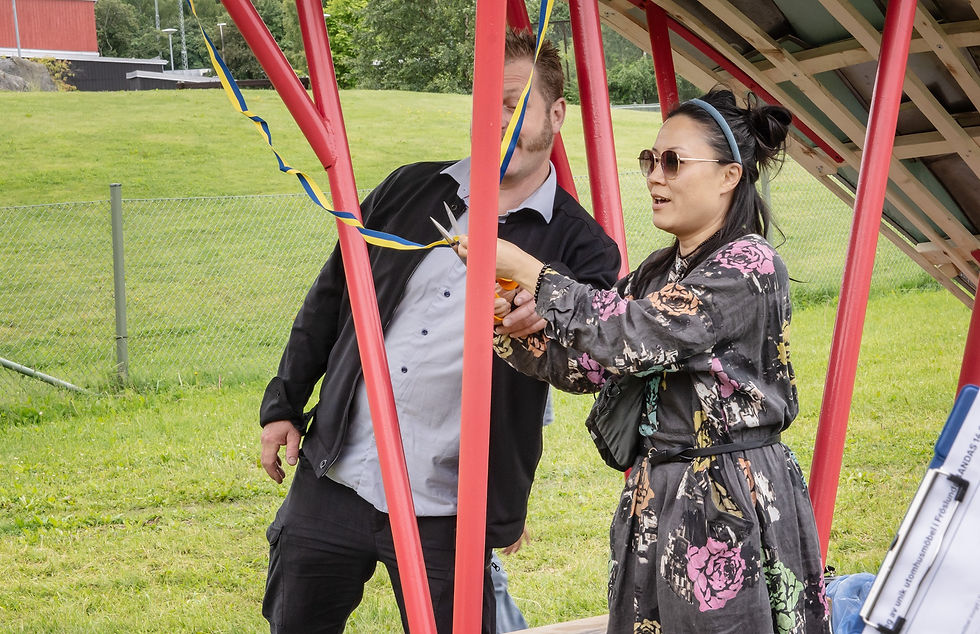
Photo by: Magnus Ornhammar


Comments